








What the plasma screensaver is
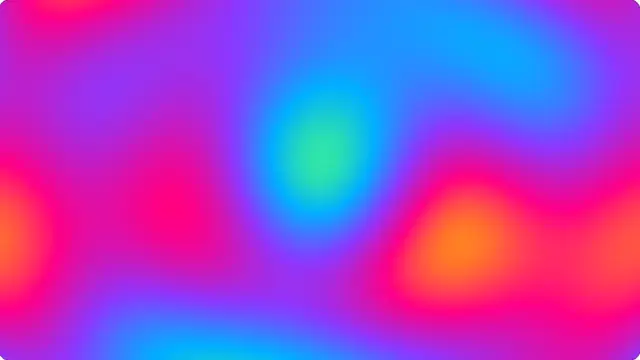
Four fields are summed at every point: one running across the screen, one down it, one on the diagonal and one radiating from the centre. Each drifts at its own rate, so the sum never settles into a pattern you can follow. That number picks a colour out of a palette that is itself sliding, which is what makes the whole surface appear to churn.
It became a demoscene staple because it looks expensive and costs almost nothing. On a 386 it was a lookup table and an addition per pixel; here it is computed on a small grid and scaled up by the browser, which is where the soft edges come from.
- A colourful ambient background for a party, a stall or a stage
- A warm, slow-moving screen for a display that runs all day
- A demoscene reference on a machine that never saw the demoscene
Plasma effect screensaver, five palettes
Scale changes how tightly the waves are packed. Low values give you three or four broad blooms filling the screen; high values break it into a fine boiling texture. Speed changes how fast everything drifts, including the palette cycling, and turning it right down gives a nearly still image that changes over minutes.
The palettes are the other half of the effect. Rainbow is the classic demo look, Fire and Ocean stay within one part of the spectrum, and Monochrome turns it into something closer to smoke.
How to run the plasma screensaver full screen
Press the fullscreen button on the player, or the F key. Escape brings you back to the page. On a desktop browser F11 does the same job and hides the browser’s own toolbars as well, which is what you want on a display that is going to be left running.
Everything you change in the settings is written into the address bar as you change it, so the version you have set up is a link. Bookmark it, or send it to whoever is running the screen. Space pauses and resumes at any time.