













Skip to content
Browser Screensaver

Burn-in & Image Retention Test

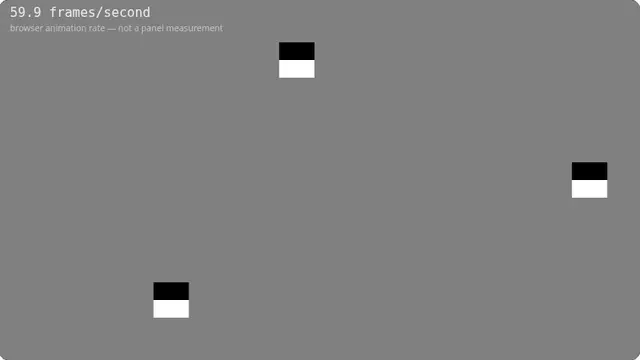
Flat colour fields that reveal a ghost of whatever was on screen before. Grey and the primaries expose it best.

Burn-in shows as a ghost of an old image on a flat colour. Start the test and step through the fields, looking for shapes that should not be there.

Press F for fullscreen, Esc to exit.

What the burn-in & image retention test shows

Burn-in is permanent: pixels that have displayed the same bright content for thousands of hours age faster than their neighbours and never fully recover. It shows as a faint permanent ghost of a taskbar, a channel logo, or a game HUD.

Image retention is temporary and looks identical at first. It fades over minutes or hours of varied content. The only way to tell them apart is to wait — which is why the honest answer to "is this burn-in?" is almost always "run varied content for a day and look again".

Telling burn-in from image retention

Step through the colours slowly and look for shapes: a rectangle where a taskbar sits, a logo outline, the frame of a window you keep in the same place. Grey shows it best; red and green often show it more strongly than blue.

If you find something, run varied content for a few hours and test again. Retention will have faded noticeably. Burn-in will be exactly where it was.

What this test cannot tell you

Nothing here can remove burn-in. Pixel-refresh routines built into OLED televisions can reduce retention, but genuine burn-in is physical ageing of the emitters and there is no software fix — anything claiming otherwise is selling something.

Questions

What is the difference between burn-in and image retention?

Retention is temporary and fades within minutes to hours of varied content. Burn-in is permanent, caused by uneven ageing of the pixels. They look the same on the day you find them; the only reliable test is to wait and look again.

Can burn-in be fixed?

No. Panel-refresh routines on OLED televisions help with retention, and running varied content clears retention on its own, but genuine burn-in is physical wear on the emitters. No software can undo it.

Do LCDs get burn-in?

Very rarely. LCDs can show temporary image retention, which fades. Permanent burn-in is overwhelmingly an OLED and plasma phenomenon.

Is the burn-in & image retention test free?

Yes — free, with no account, no download and no limit. It is a web page, so it runs on any device with a modern browser.

Do I need to be fullscreen?

For anything involving the whole panel, yes. Press F, or the fullscreen button. On a desktop browser F11 also hides the browser toolbars, which matters for the tests where a bright strip at the top of the screen would affect what you are looking at.