























What the screen uniformity test shows
No LCD is perfectly uniform. The backlight is brighter near its edges or its emitters, and the layers in front of it vary slightly across the panel. Some variation is normal; a visible gradient or a distinctly warmer corner is not.
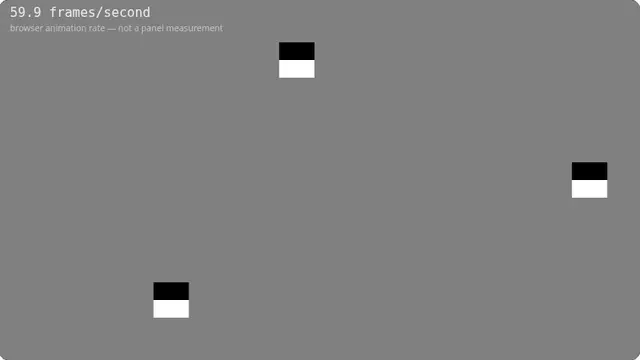
Mid grey is the most revealing field, and it is the one most tests leave out. White saturates your perception of brightness differences and black hides everything except bleed, but a 50% grey shows both brightness variation and colour tinting at the same time.
How to judge uniformity by eye
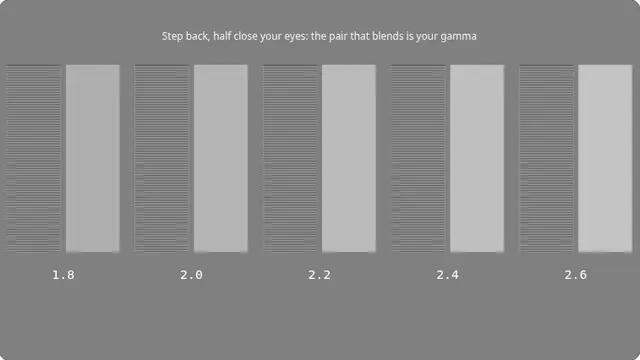
Sit back further than you normally would, at least an arm and a half from the screen, and look at the panel as a whole rather than scanning it. Uniformity problems are a low-frequency pattern; they are much easier to see out of focus than in.
Then defocus deliberately — half close your eyes. Fine detail disappears and broad brightness variation becomes obvious. This is the same trick used for judging print, and it works for the same reason.
What this test cannot tell you
A web page cannot measure luminance at points across your panel. Professional uniformity figures come from a meter sampling a grid of positions; this shows you the field and leaves the judgement to your eyes.