












Skip to content
Browser Screensaver

Monitor Test Patterns

The geometric test patterns in one place: an alignment grid, one-pixel checkerboards and lines, a contrast pattern, and RGB convergence.

Press F for fullscreen, Esc to exit.

What the monitor test patterns shows

These are the patterns that check the signal path rather than the colour. Together they will tell you whether your display is scaling, cropping, over-sharpening or misconverging — none of which are visible in normal use until you know to look.

Everything is drawn on exact device pixels. That is the whole difference between a useful test pattern and a picture of one.

Which pattern to use for what

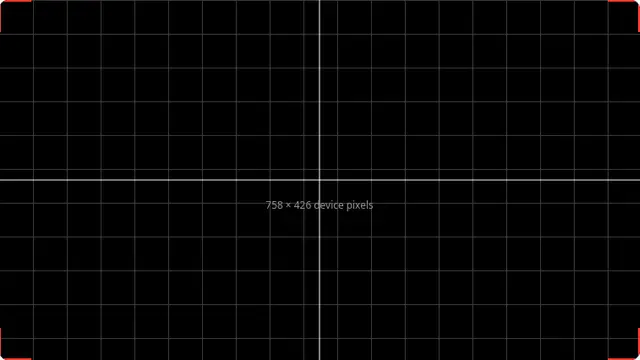
Start with the alignment grid: it catches overscan and scaling at a glance. Then the one-pixel checkerboard for sharpness, and convergence if you are looking at a projector or an older display.

  • Alignment grid — overscan, cropping, geometry, uneven scaling
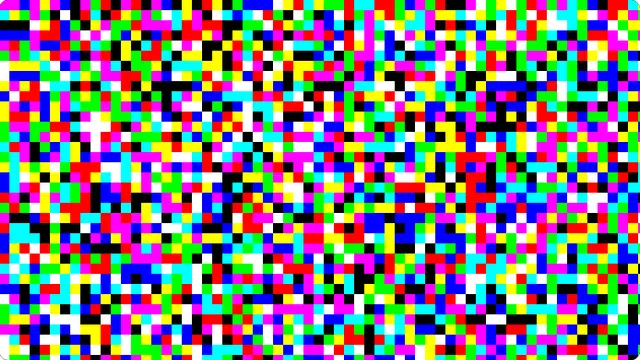
  • One-pixel checkerboard — native resolution and over-sharpening
  • One-pixel lines — the same thing, more sensitive to horizontal scaling
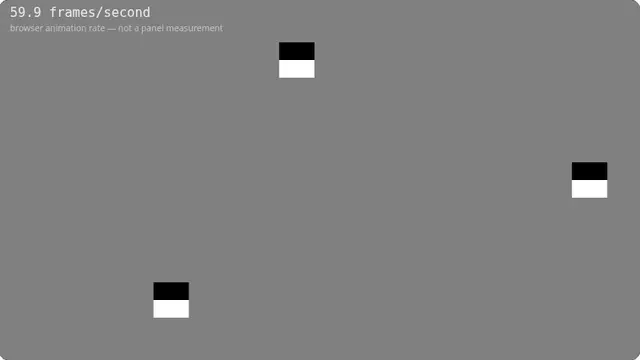
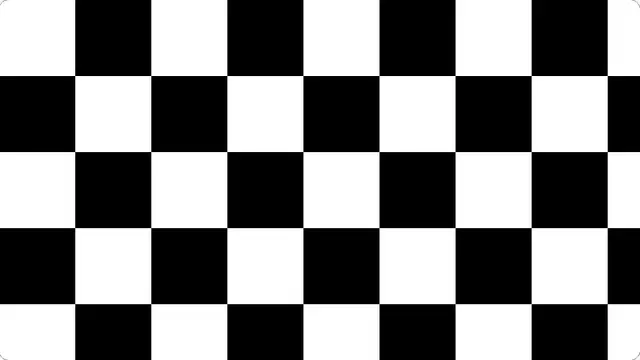
  • Contrast checkerboard — black and white handling, and local dimming behaviour
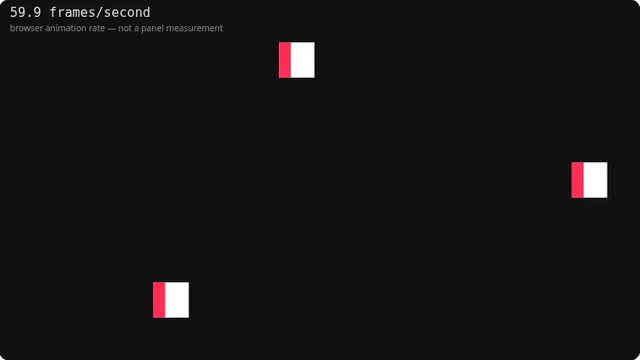
  • RGB convergence — colour fringing on projectors and older panels

What this test cannot tell you

All of these depend on 100% browser zoom and a display running at its native resolution. Change either and you are testing the scaler, not the panel.

Questions

Which pattern should I start with?

The alignment grid. It catches overscan and scaling immediately, and both of those make every other pattern unreliable until they are fixed.

What is the contrast checkerboard for?

Large black and white squares side by side. On a display with local dimming you can watch the backlight zones respond, and on any panel it shows how cleanly it handles a hard edge between extremes.

Why do these need native resolution?

Because a scaler cannot split a pixel. Once the image is being resized, a one-pixel pattern is no longer one pixel, and what you are looking at is the scaler’s output rather than your panel.

Is the monitor test patterns free?

Yes — free, with no account, no download and no limit. It is a web page, so it runs on any device with a modern browser.

Do I need to be fullscreen?

For anything involving the whole panel, yes. Press F, or the fullscreen button. On a desktop browser F11 also hides the browser toolbars, which matters for the tests where a bright strip at the top of the screen would affect what you are looking at.