






















Time zones that stay right
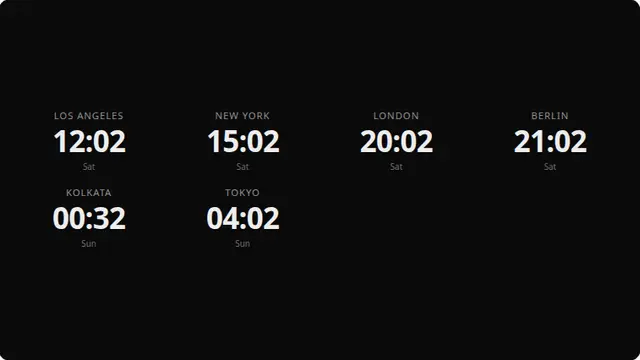
Zones are resolved by the browser’s own internationalisation data rather than by adding a fixed number of hours to UTC. That is the only approach that gets daylight saving right — and gets it right next year too, when a country changes its rules and nobody remembers to update a lookup table.
It also means city names, ordering and the twelve or twenty-four hour format follow your system’s own conventions rather than an assumption about where you are.
- A shared screen in an office with people in several places
- Checking whether it is a reasonable hour to call someone
- A large local clock on a spare monitor or a tablet
One big clock or many small ones
With the world toggle off, the page becomes a single very large local clock with the date underneath — which is what most people actually want on a spare screen.
With it on, the grid fills with cities and the day of the week for each, which matters more than people expect: it is the difference between "it is nine" and "it is nine, and it is tomorrow there".
Running it as a display clock
Press F for fullscreen. On a phone or tablet, add the page to your home screen and it opens as a clock with no browser interface at all.
It reads your device’s clock, so it keeps working with no connection and never disagrees with the time in your menu bar.