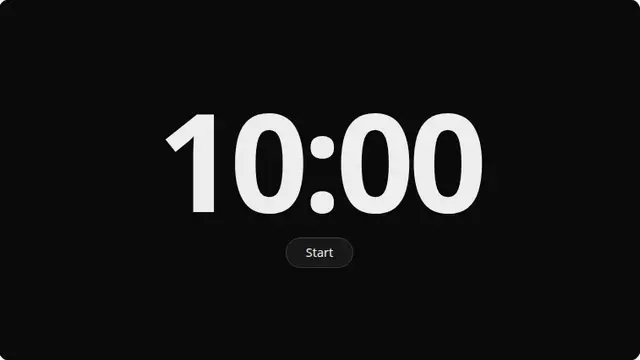
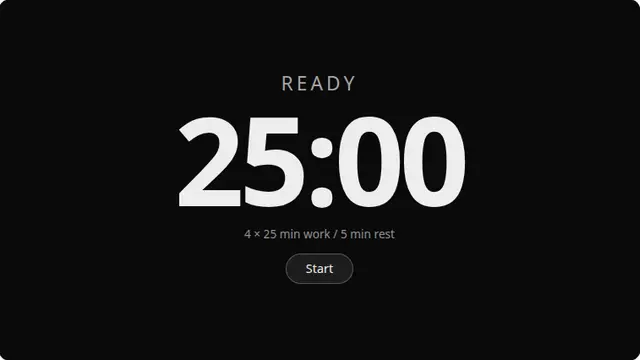
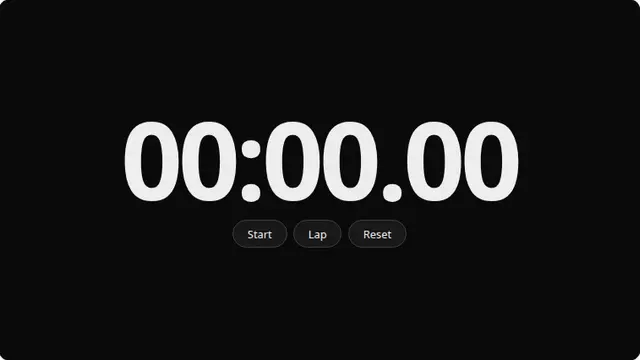



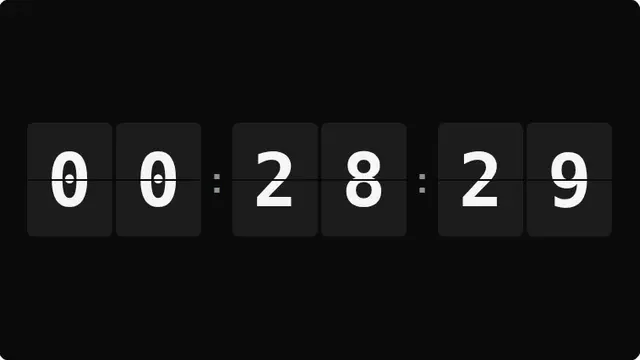
















A countdown you can read from across the room
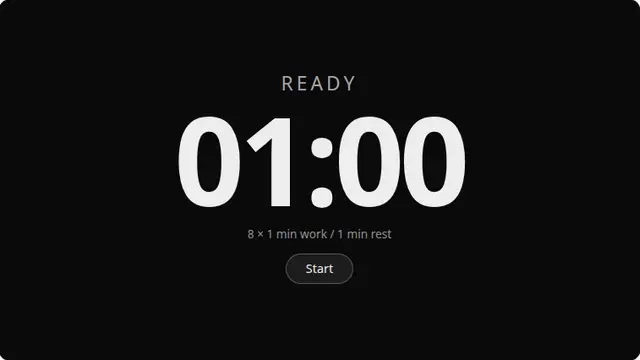
The digits scale with the window rather than sitting at a fixed size, so the same page works on a phone on a desk and on a projector at the front of a hall. There is no interface around it — a timer that shares the screen with a menu bar and three buttons is a timer nobody at the back can read.
Time is tracked against a wall-clock end point rather than by counting animation frames. That means a backgrounded tab, a locked laptop or a slow machine does not cause the timer to drift, which is the failure that makes most browser timers untrustworthy for anything that matters.
- Timing a talk, a presentation slot or a workshop exercise
- A visible countdown on a screen during a break at an event
- Timing a game, a test or a classroom activity
- Anything where everyone in the room needs to see the same clock
Online timer with settings in the link
Change the length and the address bar changes with it. That link is the timer: bookmark the fifteen minute one you use every standup, or paste it into a meeting invitation so everyone opens the same clock.
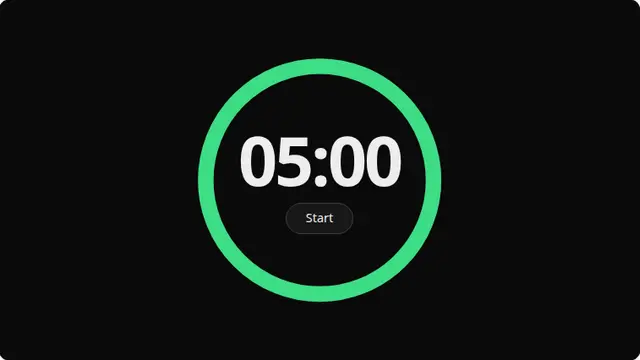
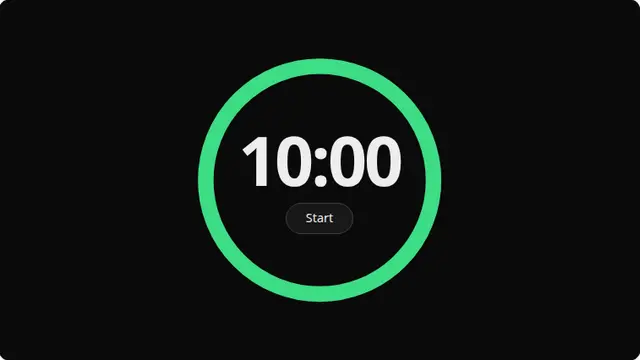
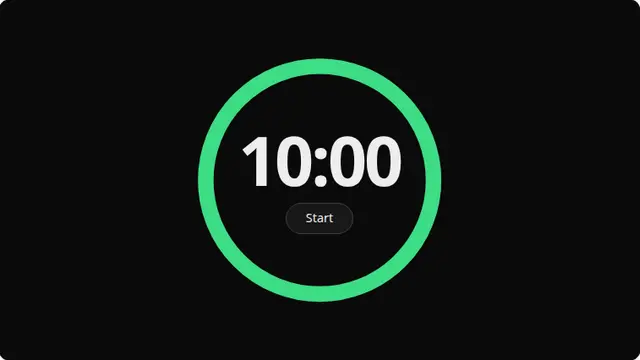
The three display styles suit different rooms. Digits are the most precise. The ring is easier to read at a glance and works for people who cannot read numbers yet. The bar is the most legible from a long way back, where digits start to blur together.
How to run the countdown full screen
Press F, or the fullscreen button. F11 additionally hides the browser toolbars, which is what you want on a display at the front of a room. Press Start, and Escape when you are done.
The last ten seconds turn amber and the finished state turns red and flashes, so the state is readable from a distance without anyone needing to squint at the numbers.