











What a gray screen is used for
- Checking screen uniformity, where grey shows unevenness better than white or black
- A neutral reference for judging colour cast and white balance
- Setting camera exposure and white balance against a flat, neutral field
- A low-fatigue background for long sessions
Gray screen online: #808080 at full screen
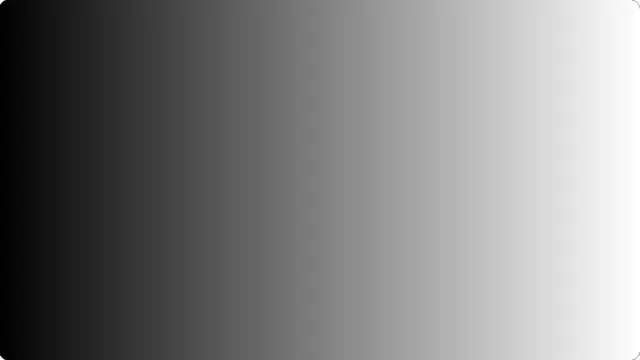
Mid grey is the single most useful field for judging panel uniformity. White saturates the eye and hides gentle variation; black hides everything but bleed. A flat 50% grey sits where the eye is most sensitive to small differences, so tinting, blotching and clouding all show up here first.
It is also the standard neutral reference. All three channels are driven equally, so any colour you can see in this field is the display adding it — a warm cast, a cool corner, or a colour shift towards one edge. Photographers use grey cards for exactly this reason.
Note that #808080 is mid grey by code, not by perceived brightness. Because displays apply a gamma curve, #808080 looks considerably darker than half as bright as white. If you want perceptual mid-grey, #BCBCBC is closer.
How to get a full screen gray background
Press the fullscreen button on the player above, or the F key. Escape returns you to the page. On a desktop browser F11 does the same job and hides the browser's own toolbars as well.
The colour box is a control, not a picture: use the hex field to enter any value, pick another shade from the palette, or download the current colour as a PNG at your screen's resolution. Whatever you set is written into the address bar, so the link you copy reproduces exactly what you are looking at.