
















What the game of life screensaver is
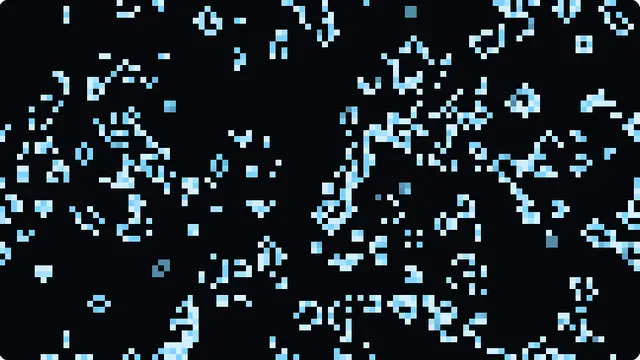
The rules take one line. A live cell with two or three live neighbours survives; a dead cell with exactly three neighbours comes to life; everything else dies. That is all of it — there is no randomness after the first frame, and every pattern you see is a consequence of the soup it started from.
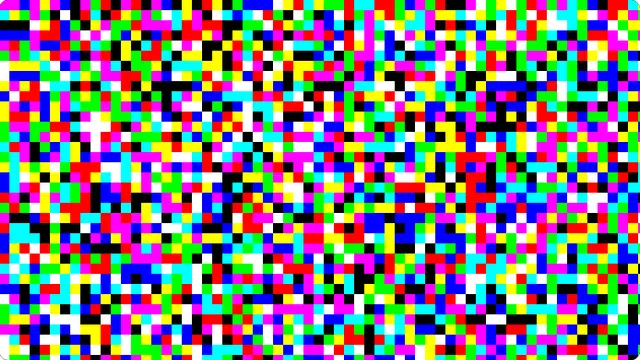
Cells here are tinted by how long they have been alive: new births arrive almost white and cool into the chosen colour as they persist. Nothing in Conway’s rules says to do that, but it turns a flat binary grid into something with visible structure, and it makes gliders obvious as they cross the board.
- A screen for an office, a lab or a classroom that rewards a second look
- A live demonstration of cellular automata for teaching
- An ambient display that is never the same twice
Conway’s Game of Life as a screensaver
Every random start eventually decays into still lifes and small oscillators, which would leave a frozen screen. The board is watched for repetition, and when the same arrangement comes round again it holds for a moment so you can see where it landed, then reseeds. The edges wrap, so a glider leaving the right of the screen arrives at the left instead of dying against a wall.
Starting soup sets how crowded the first frame is. Sparse starts die back quickly and leave a handful of isolated structures; dense ones churn for much longer before settling. Around a third is where the interesting middle sits.
How to run the game of life screensaver full screen
Press the fullscreen button on the player, or the F key. Escape brings you back to the page. On a desktop browser F11 does the same job and hides the browser’s own toolbars as well, which is what you want on a display that is going to be left running.
Everything you change in the settings is written into the address bar as you change it, so the version you have set up is a link. Bookmark it, or send it to whoever is running the screen. Space pauses and resumes at any time.